Halal Meat Enzyme Procurement Checklist for QA and Purchasing Teams
When a halal meat processor evaluates an enzyme supplier, the decision is not only about performance. It is about halal suitability, documentation readiness, predictable plant behavior, residue control, and supply reliability across repeated lots.
Amanah Catalytics supports QA, procurement, and production teams that need a structured approval path before moving from sample evaluation to bulk ordering. Use this checklist to compare suppliers, reduce approval delays, and prepare a defensible internal file.
Primary use case: selecting a halal enzyme supplier for meat processing applications such as tenderization support, protein modification, brine functionality, yield consistency, texture management, and process optimization.
Request a quote through the on-site form
1. Start with halal suitability, not price
Before reviewing cost, confirm whether the enzyme solution can fit your halal assurance program. A low initial price can become expensive if documents are incomplete, origin details are unclear, or the supplier cannot support your auditor’s questions.
Procurement questions to ask
- Is the enzyme source clearly identified?
- Are fermentation substrates, processing aids, carriers, and stabilizers disclosed at a level suitable for halal review?
- Is halal certification available from a recognized body where required by your market?
- Can the supplier provide current documents before trial approval?
- Are document updates controlled by lot, revision date, and product code?
What Amanah Catalytics prepares for review
- Halal suitability statement or halal certificate where applicable
- Product specification sheet
- Ingredient and carrier declaration appropriate for QA review
- Allergen and GMO-position documentation where applicable
- Lot traceability and certificate of analysis package
- Regulatory and food-contact support documents relevant to the product type
2. Build a supplier documentation checklist
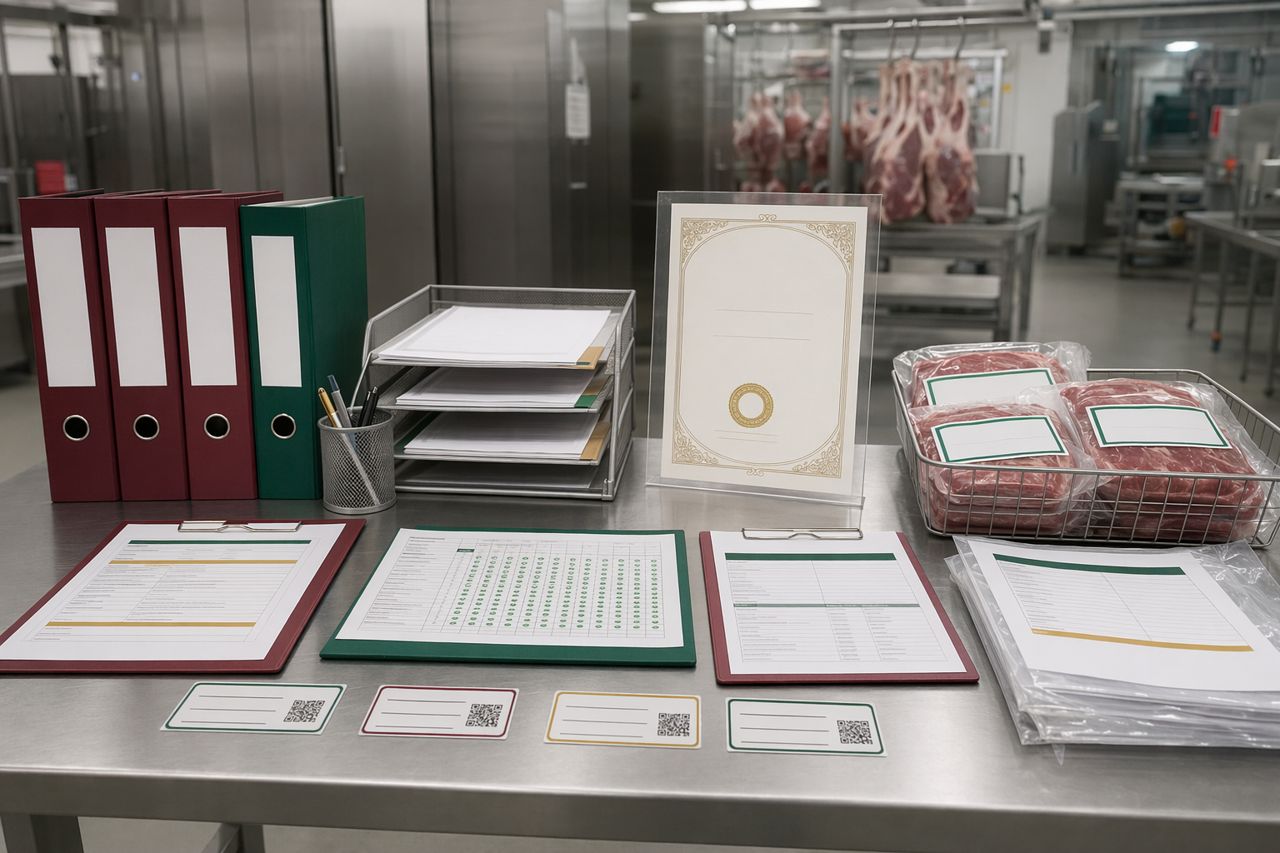
A complete supplier file helps QA approve trials faster and reduces back-and-forth during audit season. For halal meat processors, the file should support both compliance and operational decision-making.
Core documents to request before sample approval
-
Halal documentation
Certificate, suitability statement, certifying body details, scope, expiry date, and product name alignment. -
Technical specification
Product form, composition profile, carrier information, storage condition, handling guidance, and intended processing role. -
Certificate of analysis
Lot identification, release status, relevant quality attributes, microbiological limits, contaminant controls, and approval date. -
Traceability support
Batch numbering logic, manufacturing site identification, retained sample policy, and recall communication procedure. -
Food safety support
Allergen statement, contamination control position, foreign material controls, and safety data where applicable. -
Change notification policy
Written process for changes to source, carrier, manufacturing site, specification, packaging, or documentation.
3. Confirm plant-trial readiness
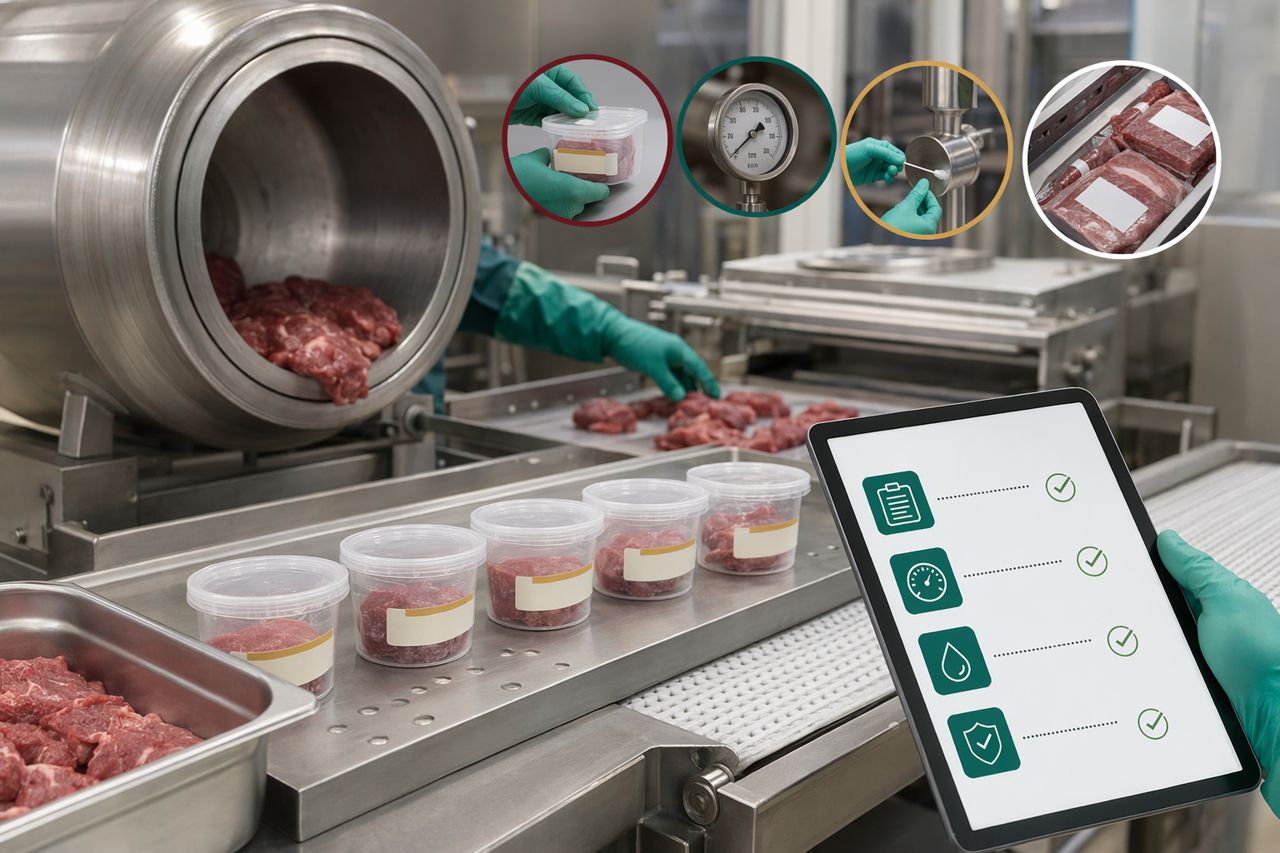
A supplier should help you test the enzyme under your real process conditions, not only provide a sample. Trial planning should be practical, documented, and aligned with production constraints.
Trial design points for QA and production
- Meat type and cut profile
- Process step where the enzyme will be introduced
- Contact time range under plant conditions
- Temperature and pH exposure during normal production
- Brine, marinade, or dry-blend compatibility
- Mixing, injection, tumbling, or surface application method
- Hold time before cooking, chilling, packaging, or further processing
- Sensory and texture targets
- Yield and purge expectations
- Labeling and halal review checkpoints
Recommended trial records
- Trial batch ID and product code
- Enzyme lot number
- Addition point and process timing
- Operator notes and deviations
- Texture and sliceability observations
- Cook yield or moisture retention comparison
- Purge, bite, and appearance notes after storage
- QA release decision and next-step recommendation
4. Evaluate residue control and process stop points
Meat processors need confidence that enzyme behavior is controlled. Residue control is not only a laboratory question; it is a process design question.
Review these control factors
- Whether heat treatment, pH shift, time, dilution, or downstream processing limits continued enzyme action
- Whether the enzyme could affect texture during chilled holding
- Whether over-tenderization risk is understood and preventable
- Whether the product is compatible with your cooking, smoking, drying, or chilling profile
- Whether your final product specification includes texture boundaries and release criteria
Amanah Catalytics helps define practical process windows so QA and production can evaluate performance without creating unnecessary operational risk.
5. Compare performance by buyer value, not vague claims
Enzyme suppliers may describe products as fast, strong, or premium. QA and purchasing teams need more concrete evidence.
Useful comparison criteria
| Evaluation area | What to compare | Why it matters |
|---|---|---|
| Halal documentation | Certificate status, origin clarity, revision control | Supports internal approval and audits |
| Process fit | Introduction point, temperature tolerance, brine compatibility | Reduces trial failure and line disruption |
| Yield consistency | Moisture retention, purge control, repeatability | Protects margin and customer specification |
| Texture control | Bite, tenderness, sliceability, over-softening risk | Prevents complaints and rework |
| Lot reliability | COA consistency, traceability, change notification | Protects production continuity |
| Support speed | QA response time, trial guidance, quote clarity | Shortens approval workflow |
| Bulk supply | Lead time, packaging options, forecast support | Reduces procurement risk |
6. Purchasing checklist before bulk order
Before a bulk order is approved, purchasing should confirm that QA, production, and supplier expectations are aligned.
Final approval questions
- Has QA approved the halal documentation package?
- Has the product name on the quote matched the approved specification?
- Has the trial lot been linked to production notes and QA observations?
- Has the intended use level been documented internally without relying on informal operator memory?
- Has storage and shelf-life handling been confirmed?
- Has packaging size been matched to plant usage and open-container control?
- Has lead time been confirmed against the production schedule?
- Has the supplier confirmed change notification expectations?
- Has the supplier provided contact details for technical and quality questions?
7. Red flags when comparing enzyme suppliers
A supplier may not be ready for halal meat processing if they cannot answer basic QA questions quickly and consistently.
Watch for these warning signs
- Halal documents do not match the product being quoted
- Certification scope is unclear or expired
- Source, carrier, or processing aid information is incomplete
- Lot documents arrive only after repeated requests
- Trial guidance is generic and not adapted to meat processing
- Supplier cannot explain process controls for texture or residue risk
- Bulk lead times are uncertain
- Change notification is informal or undocumented
- Technical claims are not linked to plant-trial outcomes
8. How Amanah Catalytics supports approval workflows
Amanah Catalytics is built for B2B enzyme procurement in regulated food production environments. For halal meat processors, we focus on practical documentation, controlled trials, and reliable supply planning.
What our team can provide
- Product matching based on meat type, process step, and target outcome
- Halal documentation review support before sample shipment
- Trial planning guidance for QA and production teams
- Specification and lot documentation for internal supplier files
- Bulk quote preparation with packaging and lead-time visibility
- Support for repeat ordering and lot-to-lot traceability
We do not ask QA managers to approve vague enzyme claims. We help your team build a controlled, documented path from supplier comparison to plant trial to purchasing decision.
9. Internal approval workflow template
Use this workflow when adding an enzyme supplier to your approved vendor system.
Step 1: Initial supplier screen
Confirm halal suitability, product fit, supply region, minimum order expectations, and documentation availability.
Step 2: Document review
QA reviews halal, specification, COA, traceability, allergen, safety, and change-notification documents.
Step 3: Trial protocol approval
Production and QA agree on trial product, process step, comparison batch, observations, and release criteria.
Step 4: Controlled plant trial
Run a documented trial under normal plant conditions with recorded batch IDs, lot numbers, process notes, and product outcomes.
Step 5: QA and purchasing review
Compare documentation, performance, lead time, packaging, price, and supplier responsiveness.
Step 6: Bulk quote and approval
Request a formal quote that matches the approved product code, packaging size, destination, and forecasted usage.
10. Request a quote
If your team is comparing suppliers or preparing an approval file, Amanah Catalytics can help you identify the right enzyme option and supporting documentation for your halal meat process.
Include these details in the quote form
- Meat product type and processing step
- Target outcome such as tenderness, yield consistency, purge control, or texture management
- Current process constraints
- Halal documentation requirements
- Trial quantity or expected bulk volume
- Destination country and preferred delivery timing
Ready to build a compliant approval path? Use the on-site request a quote form and our team will respond with product-fit guidance, documentation availability, and next-step recommendations.
FAQ
What should a halal meat processor verify before buying enzymes?
Verify halal suitability, source and carrier transparency, specification documents, lot traceability, certificate of analysis availability, change notification policy, plant-trial guidance, and bulk supply reliability.
Can Amanah Catalytics support QA documentation before a trial?
Yes. We can provide relevant documentation for QA review before trial planning, subject to product type and market requirements.
Why is plant-trial support important?
Enzyme behavior depends on the meat system and process conditions. A controlled plant trial helps confirm texture, yield, purge, handling, and residue-control expectations before bulk ordering.
What makes a supplier suitable for halal enzyme procurement?
A suitable supplier provides clear halal documentation, traceable lots, practical technical support, consistent supply, and controlled communication when specifications or manufacturing details change.
How do we start?
Submit the on-site request a quote form with your product type, target outcome, halal documentation needs, and expected order timing. Amanah Catalytics will recommend a practical next step.