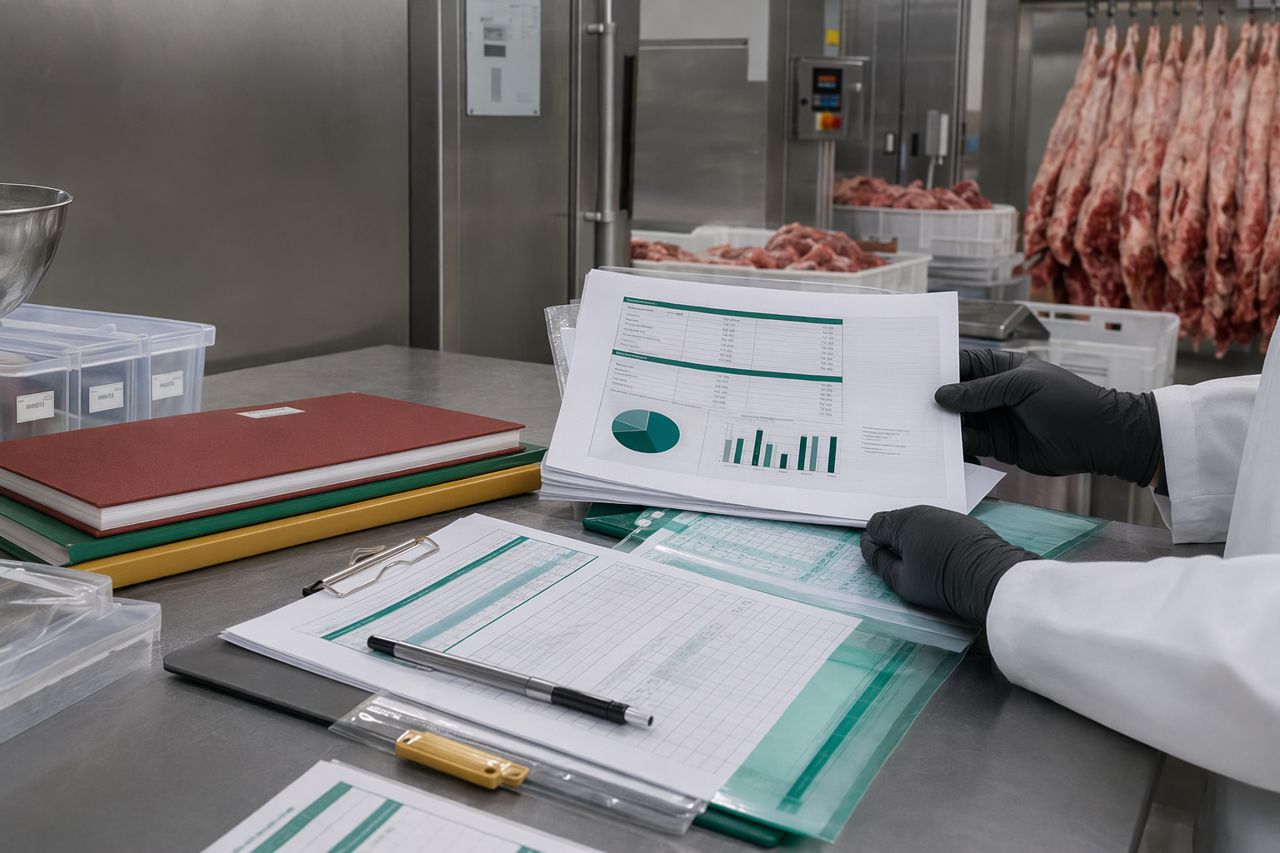
Enzyme Documentation for Halal Meat Processors
Approving an enzyme ingredient is not only a performance decision. For a halal meat processor, it is a quality, compliance, labeling, and supplier-control decision.
Amanah Catalytics supports QA, regulatory, procurement, and process teams with enzyme documentation packages designed for plant review before commercial use. If you are searching for a halal enzyme supplier for meat processing, this checklist outlines the files your team should request, how to review them, and where supplier clarity matters most.
Our role is practical: provide traceable documentation, support halal suitability review, help define plant trial conditions, and maintain change-control discipline so your team can approve with confidence.
What QA Should Expect Before Approving an Enzyme
A complete enzyme approval file should help your team answer five questions:
- Is the enzyme suitable for the intended halal processing environment?
- Can the ingredient be traced to supplier, lot, and manufacturing documentation?
- Are allergen, origin, and composition statements clear enough for internal review?
- Can the plant run a controlled trial without creating residue, carryover, or labeling uncertainty?
- Will the supplier notify you before relevant formulation, source, site, or documentation changes?
If any of these answers are incomplete, approval can stall. Amanah Catalytics structures enzyme support around documentation readiness, not only product selection.
The Core Enzyme Documentation Checklist
Use this checklist when evaluating an enzyme for halal meat processing applications such as texture management, yield consistency, protein modification, controlled tenderization, or process optimization.
| Documentation item | Why QA needs it | What to verify |
|---|---|---|
| Certificate of analysis | Confirms supplied lot identity and release status | Product name, lot number, manufacture or release reference, specification alignment |
| Halal suitability file | Supports internal halal review and certifier discussion | Source, processing aids, carrier system, facility controls, certificate availability where applicable |
| Ingredient composition statement | Clarifies what is being introduced into the plant | Enzyme preparation, carrier or stabilizer system, processing aid status, declared components |
| Allergen statement | Supports allergen risk assessment and segregation review | Major allergen presence, cross-contact statement, plant handling controls |
| GMO or biotechnology statement | Supports customer and regulatory file requirements | Strain or production-system disclosure at the level needed for your market |
| Country of origin or manufacturing site statement | Supports supplier qualification and traceability | Site, country, responsible manufacturer, distributor traceability |
| Safety data sheet | Supports EHS and receiving procedures | Handling guidance, storage, spill response, compatibility with plant practices |
| Specification sheet | Defines expected product characteristics | Appearance, storage, packaging, intended use, handling limits |
| Residue and carryover guidance | Supports cleaning, labeling, and processing aid review | Application point, inactivation or removal logic, wash or heat step relationship |
| Plant trial protocol | Controls risk before scale-up | Trial objective, batch boundaries, sampling plan, hold points, acceptance criteria |
| Change-control commitment | Protects approved files after launch | Notification triggers, replacement documentation, review timeline |
Certificate of Analysis: More Than a Release Document
A certificate of analysis should do more than confirm that a lot was released. For QA managers, it should connect the enzyme shipment to the approved specification and supplier file.
For meat processors, the most useful certificate of analysis includes:
- Product name matching the approved internal material code
- Lot or batch number that aligns with the label and shipping documents
- Release date or manufacturing reference
- Specification confirmation relevant to the approved product file
- Supplier contact for document verification
- Clear revision or document-control status
Amanah Catalytics provides lot-aligned documentation so receiving, QA, and procurement teams can reconcile paperwork without creating manual exceptions.
Halal Review: Questions to Resolve Before the Trial
Halal suitability review should happen before plant trials, not after a successful production test. Once an enzyme has touched meat, brine, marinade, trim, or finished product streams, uncertainty becomes expensive.
Before approval, confirm:
- Whether the enzyme preparation is supported by halal documentation where applicable
- Whether carriers, stabilizers, and processing aids are compatible with your halal program
- Whether any animal-derived inputs are present or excluded
- Whether alcohol, fermentation media, or downstream processing aids require review
- Whether the supplier can provide documents suitable for your halal certifier or internal halal committee
- Whether formulation changes require notification before shipment
Amanah Catalytics helps QA teams prepare a clean halal review packet so the approval path is clear before production scheduling.
Allergen and Label File Support
Even when an enzyme is used as a processing aid, your plant still needs defensible documentation. Customer audits, retailer specifications, export programs, and private-label requirements can all ask for evidence.
Your enzyme file should include:
- Allergen declaration or cross-contact statement
- Ingredient composition statement suitable for regulatory review
- Processing aid position, where applicable to the market and use case
- Labeling support language for internal assessment
- Residual presence or functional effect discussion when relevant
- Compatibility with customer specification templates
Amanah Catalytics does not replace your regulatory authority or certifier. We provide supplier documentation that helps your team make a documented decision.
Residue Control and Carryover Review
Residue control matters in halal meat processing because enzyme use often intersects with brines, marinades, injection systems, tumblers, forming lines, thermal steps, and sanitation cycles.
A controlled review should identify:
- Where the enzyme enters the process
- Whether it contacts raw meat, formulated meat, surfaces, or recirculating systems
- What step limits or stops enzyme action
- How the process prevents unintended carryover between halal programs or product families
- Whether cleaning procedures are sufficient for the application point
- Whether hold time, temperature, and mixing variability could affect finished-product consistency
The goal is not paperwork for its own sake. The goal is predictable yield, texture, and compliance behavior across real production conditions.
Plant Trial Documentation: What to Define Up Front
A well-designed enzyme trial protects both product quality and compliance status. Before running the first batch, QA and operations should agree on the trial boundary.
A practical trial file should define:
Trial objective
Examples include improved tenderness consistency, reduced texture variability, controlled protein modification, improved marinade performance, or yield stabilization.
Product and line scope
Identify the meat species, product format, line, shift, batch size, and whether the trial is isolated from commercial release.
Application point
Document whether the enzyme is added through marinade, brine, dry blend, tumble, injection, surface application, or another controlled step.
Hold points
Define when QA can stop the trial, quarantine material, or release the next stage.
Evaluation criteria
Use plant-relevant measures: texture consistency, purge control, sliceability, cook performance, customer specification fit, process repeatability, and sensory review.
Documentation capture
Record lot numbers, time windows, sanitation status, operator notes, deviations, and retained samples according to your internal program.
Amanah Catalytics supports plant trials with documentation that fits how QA teams actually approve ingredients.
Supplier Reliability and Change Control
After approval, the most important supplier behavior is consistency. A halal meat processor needs confidence that an approved enzyme does not silently change.
Ask your supplier to define notification triggers for:
- Manufacturing site changes
- Enzyme source or production-system changes
- Carrier, stabilizer, or excipient changes
- Halal documentation status changes
- Allergen statement changes
- Specification or release-document revision changes
- Packaging, storage, or shelf-life changes
Amanah Catalytics supports controlled supply relationships with clear communication, document refresh support, and quote-to-supply traceability.
How Amanah Catalytics Supports Your Approval Process
We help halal meat processors move from early evaluation to controlled plant trial with a documentation-first approach.
1. Application review
We review your intended process, product type, quality target, halal constraints, and documentation requirements.
2. Product fit recommendation
We identify enzyme options that fit the application and the approval pathway. The recommendation considers performance, handling, residue control, and supplier documentation.
3. Documentation packet
We provide available product documents for QA, regulatory, halal review, procurement, and customer file preparation.
4. Trial support
We help define trial boundaries, sample quantities, batch documentation, and acceptance criteria.
5. Commercial supply discussion
We align packaging, lead time, lot documentation, change-control expectations, and quote terms before recurring use.
Request a Quote for Enzyme Documentation and Supply Review
If your team is evaluating an enzyme ingredient for halal meat processing, send us the application, meat system, intended use point, and documentation requirements. Amanah Catalytics will review the fit and respond with a quote pathway and document availability.
FAQ
What documents should a halal meat processor request before approving an enzyme?
At minimum, request a certificate of analysis, specification sheet, halal suitability documentation where applicable, allergen statement, ingredient composition statement, safety data sheet, manufacturing or origin statement, residue and carryover guidance, and change-control expectations.
Can enzyme documentation support halal certifier review?
Yes, supplier documentation can support halal certifier or internal halal committee review. The exact file depends on the product, source, carrier system, intended use, and market requirements.
Should plant trials happen before halal review?
No. For halal meat processors, halal suitability and documentation review should occur before the enzyme enters production areas or trial batches.
Is an enzyme always a processing aid?
Not automatically. Processing aid status depends on the market, product, use level, functional effect, and regulatory interpretation. Your regulatory team should make the final determination using supplier documentation.
How does Amanah Catalytics help reduce approval delays?
We focus on document readiness, traceability, halal suitability review, plant trial planning, and supplier communication so QA teams can evaluate the enzyme without chasing basic files after the fact.